The Ohio Peace Officer Training Commission improves Ohio peace officers' professional capabilities through the careful oversight of law enforcement training within the state. The commission has also been given the same responsibility in regard to private security, local corrections, jail personnel, bailiffs, and public defender investigators.
Members
The commission consists of ten members appointed by the governor with the advice and consent of the Ohio Senate. Members serve three-year terms. The commission issues recommendations to the Attorney General about matters pertaining to law enforcement training. The Ohio Revised Code requires the commission's membership to consist of:
- Two incumbent sheriffs.
- Two incumbent chiefs of police.
- One representative from the general public.
- The special agent in charge of one of the field offices of the FBI.
- A representative from the Ohio Bureau of Criminal Investigation.
- A representative from the Ohio State Highway Patrol.
- A member from the Ohio Department of Education, Trade and Industrial Education Services.
- A representative of a Law Enforcement Fraternal Organization.
The current Commission members are:
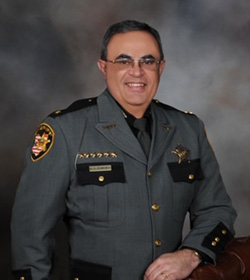
Vernon P. Stanforth, Chairperson
Sheriff, Fayette County
Washington Court House, Ohio
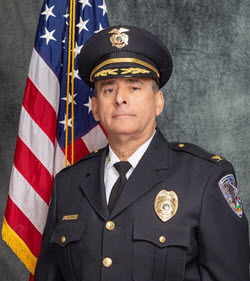
Robert Chabali
Chief, Fairfield Township Police Department
Hamilton, Ohio

Wynette Carter-Smith
Representative of the Public
Springboro, Ohio
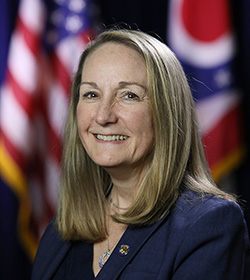
Carol O'Brien
Representative of Ohio Bureau of Criminal Investigation
Columbus, Ohio

Leah Amstutz
Ohio Department of Education
Richwood, Ohio
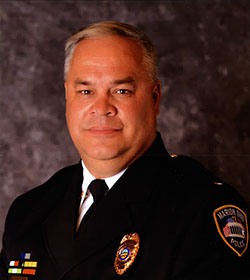
Lt. James J. Fitsko
Representative of a Law Enforcement Fraternal Organization
Marion Police Department
Marion, Ohio

Gregory Nelsen
Special Agent in Charge, FBI
Cleveland, Ohio
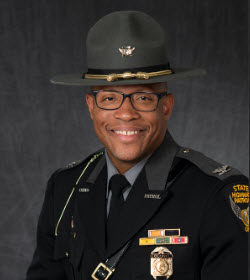
Charles A. Jones
Colonel, Ohio State Highway Patrol
Columbus, Ohio

Andrew Powers
Chief, Ohio University Police Department
Athens, Ohio

Thomas E. Kochert
Sheriff, Williams County
Bryan, Ohio
Responsibilities of the Commission
To fulfill its statutory responsibility and improve law enforcement training in Ohio, the commission may recommend to the Attorney General:
- Rules for approving peace officer, private security, corrections, public defender investigator, bailiff, canine, and firearms training and certification.
- The curriculum, minimum attendance, equipment and facility requirements necessary for approval of training programs.
- Minimum qualifications required for instructors at approved training sites.
- Categories or classifications of advanced in-service training programs for peace officers.
- Minimum requirements for the certification of canines used by law enforcement agencies.
The commission is also authorized to:
- Recommend studies, surveys, and reports designed to evaluate its own effectiveness.
- Visit and inspect any peace officer training school within the state.
- Establish fees for the services the commission provides.
- Make recommendations to the Attorney General or the General Assembly with respect to the fulfillment of its statutory responsibilities.
- Report progress to the Attorney General throughout the year and to the governor and the General Assembly annually.
Meetings
Meeting schedule | Meeting minutes